

We’re coming up on the winter holidays now, and we’ll soon be buried in charity advertisements.
On top of the non-profits looking to win support while the spirit of generosity is high, every big business with a charity wing is going to be all over the news.
We’ll see depictions of bent-backed elderly people outside mud huts and scraggly livestock. We’ll see sad, hungry people in cramped slums, washing clothing in muddy water. We’ll see images of crying children with a soundtrack of sorrowful music, and not a single person will be wearing shoes.
And more likely than not, not one of them will be white. You probably won’t see many homeless encampments from the United States or the UK represented in those commercials.
Every scene will paint a picture of extreme poverty and highlight the uncompromising hardship of life in a developing nation.
These advertisements will tug at your heartstrings, asking you to donate the price of a cup of coffee to help bring supplies to the struggling people of the third-world.
As the season of giving approaches, please, give to the poor villagers of this small African country, or wherever the commercials are supposed to be set. They need free clothing and shoes to get by! They’d starve without help from us foreign folks over here!
It’s what Jesus would have wanted!
And sure; there’s nothing wrong with charity for the most part. Goodness knows I link to disaster relief charities all the time when shit goes wrong. But not all charities are created equal, and they aren’t always as helpful as they seem.
Poverty absolutely exists around the world, and in some places it can be extreme. But these commercials are only painting part of the picture, and they don’t provide you with the full story.
Most developing nations don’t actually look like that. That’s like basing your idea of North American life on a picture of one tiny run-down trailer park.
If it seems a little patronizing, or even a little racist… that’s because it is.
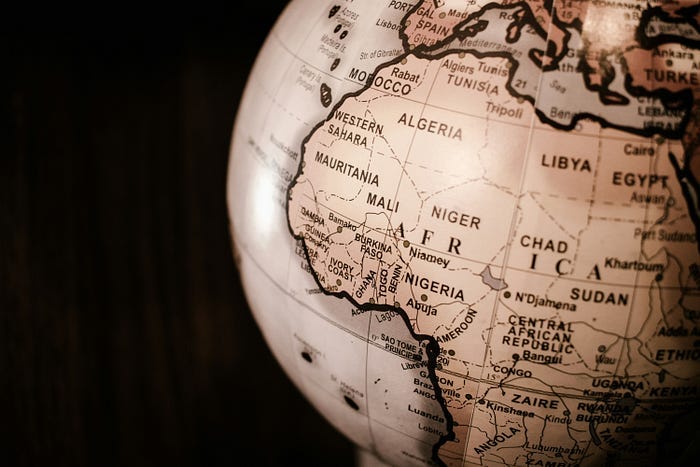
Just as an experiment, I want you to type ‘Africa’ into Unsplash. Look at what the site pulls up for images.
You’ll probably see lots of classic African animals, women carrying baskets balanced on their heads, that sort of thing. The common Western idea of what daily life in Africa looks like.
Now for fun, type in ‘Johannesburg.’ What do you get?
Cars, paved streets in the shadow of looming skyscrapers, skateboarders grinding down metal rails, people talking on cellphones on the morning commute to work. Looks like downtown New York City, doesn’t it?
Johannesburg is growing fast, and it won’t be long before it’s classified as a megacity. It’s already one of the top 100 largest urban centers on the planet. With a population of 6.5 million, 12 million if you count the surrounding area, it dwarfs Toronto.
Toronto is the largest city in Canada, which is very much not classified as a third-world country, and yet Toronto’s population is half that of booming Johannesburg.
It’s not the only big city in an African nation, either. Kenya’s capital city, Nairobi, nearly doubles Toronto’s population at around 6 million. Egypt’s capital of Cairo boasts a population of over 10 million, over 22 million if you count the surrounding region and suburbs.
There are tons of cities across the continent of Africa with large populations and booming economic growth.
In fact, most of the largest cities in the world are situated in developing nations. The reasoning is simple; big cities are where the infrastructure is.
They’re where you find schools, job opportunities and sanitation. People flock to big cities in smaller nations for the exact same reason they flock to big cities here in North America.
Bigger cities provide better options.
Massive overcrowding into major cities can cause many serious problems as well, but it looks very different from the image these commercials have created.
Rather, they tend to be the same problems big cities have in our neck of the woods; crime, obesity from poor nutrition and sedentary lifestyles, and health issues caused by pollution.
There are smaller villages in those countries, absolutely. There are also smaller villages in towns here in Canada and the United States. There are people living in extreme situations here that are just as bad as in developing nations.
But these commercials present those little villages as the norm, rather than a smaller minority.

Whether imagery like this is being used by a non-profit, a news organization or a corporate charity-attached sales stunt, it can often stray into the realm of exploitation.
Pictures are taken of people in severe and dire conditions, often without consent, and then slapped with a painful headline for the sake of making a sale.
It’s a punch to the gut, a way to press on your emotions and drive you to buy that newspaper, donate to that campaign or purchase that product. It’s exactly the same concept as regular advertising.
A skilled advertiser knows that the part of the brain that makes decisions is the same part of the brain that processes emotions. We writers make use of the same neural structure; we choose power and emotion words to keep our reader’s attention.
If you can make your audience feel something, you can convince them to do something.
Charities want you to donate. The more visceral the emotion they can hit you with, the more driven you’ll be to want to help. The more shocking and sad that the commercials are, the more dollars they can expect to rake in.
By the same token, if a big company wants to increase sales of a brand new product, there’s nothing like a ‘buy one, give one’ sort of charity drive to attract customers.
Nevermind that many of those drives actually make things worse in the long run.
We call this Poverty Porn. It does work to increase donations and sales, but it also causes its own host of problems. Not the least of which is that it objectifies struggling people and trivializes their problems.
A while back I wrote an article about the concept of Perseverance Porn, which is a similar phenomenon. With Perseverance Porn, you glorify one person’s struggles as if they’re an inspiring story.
We see examples of Perseverance Porn in the news all the time. One person does something incredible to overcome seemingly impossible odds, and thanks to their story going viral, they succeed.
The initial problem is then ignored. It’s never solved, so more people are left to deal with it on their own. They never go viral, so they never get help.
In that article, I used the example of a child selling lemonade to help pay for their sibling’s medical bills. Nobody stopped to think about why the little kid’s medical bills were too high for the family to afford, they just commended the child for helping his sister.
Perseverance Porn obfuscates wide societal issues and gives people justification to ignore them.
It offers an example of someone who ‘made it’, and creates the illusion that if one person can do it, everyone else could too. It contributes to the idea that homeless people are just lazy and unwilling to work hard to get out of their situation.
Poverty Porn goes in the opposite direction; it removes agency and dignity from the struggling person altogether. It’s not that they’re lazy, it’s that they’re incapable.
Worse, it creates the illusion that the solution to these problems is a simple quick fix. Press a donation button and it’s all good; you can safely wash your hands of it and feel like you did your part.
The thing is, when the money stops, the systemic issues that contributed to their situation are probably still there. If that doesn’t get fixed, then they’re just stuck on that neverending carousel of suck.
Poverty Porn makes you feel good for the donation you make. It invigorates you, very briefly, but not the person you think you’re helping.
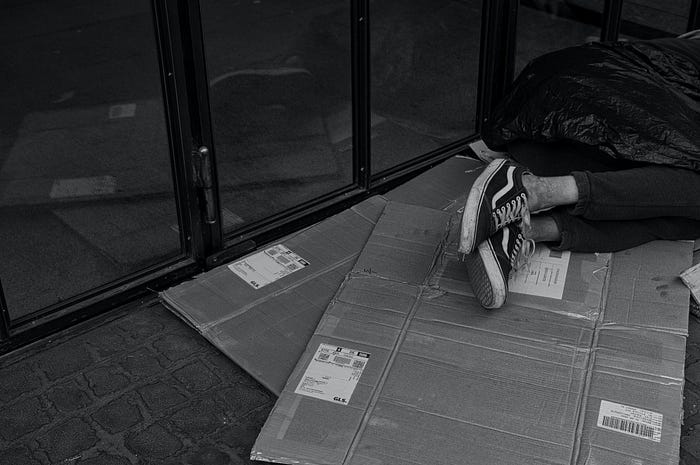
I grew up pretty poor. My family was one of those that seemed to slingshot from doing okay financially to seriously struggling to make ends meet.
I’ve lived in the bad side of town, surrounded by violence and drugs and desperate people. We were constantly moving to a new apartment, a new duplex, even a new city. We lived with family when I was little because it helped save money.
My childhood clothes were all hand-me-downs, they never fit, and vegetables were the treat I looked forward to over the daily hot dogs we lived on.
If there’s one thing I know, it’s that poverty is not a one-size-fits-all kind of thing.
People fall into poverty for any number of reasons, and no two people are going to be stuck in the same situation. Every community has its own list of problems that need solving.
When we boil it down to images of starving people in a third-world country, we completely ignore that reality.
People could be struggling because of disease, because of conflict, because of a lack of education, a lack of employment opportunities, social injustice, government corruption, and a thousand other reasons.
A lot of those problems aren’t going to be fixed by free shoes, clothing donations or a bit of cash. Some of them, maybe. In the short term.
But the wider systemic issues will still be there.
When we think about the problems of small towns here in Canada or the United States, we think about infrastructure. We think about education, unemployment, public transportation and government programs.
When we think about small towns in developing nations, we think about one-time clothing donations and building them houses. Why is that? Why do we care about long-term systemic solutions in our own back yard, but not in other countries?
It’s because our information is coming from advertising rather than reality and common sense.
Unless we look beyond the harrowing wasteland invented by Poverty Porn and actually think about the real causes of human suffering, we aren’t going to fix anything.
Solidarity wins.